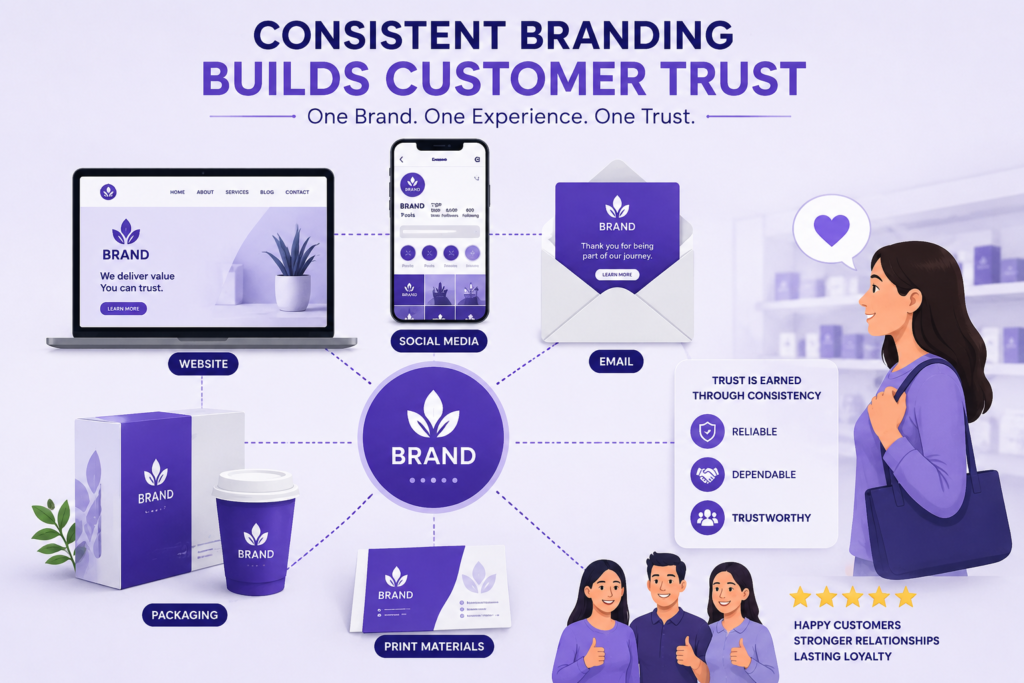
Consistent branding builds customer trust by creating a reliable and memorable experience across every customer interaction. Whether someone visits your website, follows your social media pages, or receives an email from your business, they should immediately recognize your brand through its visuals, tone, and message.
In today’s competitive digital world, people are more likely to choose brands they recognize and trust. Customers often have several options when purchasing a product or service, and consistency helps businesses stand out. When your brand looks and sounds the same everywhere, it sends a clear message that your business is professional, dependable, and committed to delivering value.
Why Consistent Branding Matters
Great branding is built on trust, consistency and purpose-not just design. It includes your brand’s personality, voice, messaging, customer experience, and overall identity. When these elements remain consistent, customers become familiar with your business. Familiarity creates confidence, and confidence leads to trust.
Benefits of consistent branding include:
Stronger brand recognition
Increased customer trust
Better customer loyalty
Improved credibility
Higher chances of repeat purchases
Customers are more likely to trust your business when your brand delivers a consistent experience every time.
The Connection Between Branding and Customer Trust
Familiarity Creates Confidence
People naturally trust what they recognize. When customers repeatedly see the same logo, colors, messaging, and tone, they begin to associate your brand with reliability.
Imagine visiting your favorite coffee shop. Every visit offers the same welcoming atmosphere and quality service. That consistency keeps you coming back.
The same principle applies online.
Professionalism Builds Credibility
Businesses with inconsistent branding often appear unorganized.
For example:
Different logos on different platforms
Changing brand colors frequently
Confusing messaging
Different writing styles on every channel
These inconsistencies may cause customers to question whether the business is trustworthy. A professional and consistent appearance reassures customers that your business is reliable.
Key Elements of Consistent Branding
1. Visual Identity
Maintain the same:
Logo
Brand colors
Fonts
Images
Graphic style
Visual consistency makes your business instantly recognizable.
2. Brand Voice
Your tone should remain consistent across:
Website
Blog posts
Social media
Emails
Advertisements
Whether your brand is friendly, professional, or informative, keep that personality throughout all communication.
3. Messaging
Your mission, values, and promises should stay the same across every platform.
Customers should clearly understand:
What your business offers
What your brand stands for
Why they should choose you
4.Customer Experience
Consistency also includes how customers experience your business. This includes:
Customer support
Response time
Product quality
Delivery experience
A positive and predictable experience strengthens customer trust
Real-World Examples
Example 1: Apple
Apple uses clean design, simple messaging, and premium branding across its website, stores, packaging, and advertising. No matter where customers interact with Apple, they receive a consistent experience. This has helped Apple become one of the world’s most trusted brands.
Example 2: Coca-Cola
Coca-Cola has maintained its iconic red color, logo, and positive messaging for decades. Even with changing marketing campaigns, the brand identity remains recognizable worldwide. This consistency has played a major role in building long-term customer loyalty.
What Happens When Branding Is Inconsistent?
Imagine finding a business on Instagram with modern branding, but when you visit its website, the colors, logo, and messaging are completely different. This creates confusion. Customers may wonder:
Is this the same company?
Is the website trustworthy?
Is the business still active?
Even small inconsistencies can reduce customer confidence.
Practical Tips for Maintaining Brand Consistency
Create Brand Guidelines
Document your:
Logo usage
Brand colors
Fonts
Tone of voice
Image style
These guidelines help everyone represent your brand consistently.
Use the Same Brand Voice Everywhere
Whether writing a blog post or replying to comments, maintain the same personality. Consistency helps customers recognize your brand instantly.
Keep Your Website Updated
Your website should reflect the same branding used across your social media platforms and marketing materials.
Review Your Content Regularly
Check that your:
Website
Social media
Email newsletters
Marketing materials
all follow the same branding standards.
Train Your Team
Everyone involved in creating content or communicating with customers should understand your brand guidelines. This ensures consistency across every customer touchpoint.
Related Resources
To learn more about digital marketing, you can also read:
SEO Basics for Beginners
Why Small Businesses Need Digital Marketing
Content Marketing Strategies That Drive Results
These articles provide additional insights into building a strong online presence.
Conclusion
Consistent branding is one of the most effective ways to build customer trust. When customers repeatedly experience the same message, visuals, and quality across every platform, they develop confidence in your business.
Trust is not built overnight. It grows through every interaction your audience has with your brand. By maintaining consistency in your visual identity, communication, and customer experience, you create stronger relationships that lead to long-term loyalty and business growth.
Whether you are a startup, a freelancer, or an established business, investing in consistent branding is an investment in your future success.